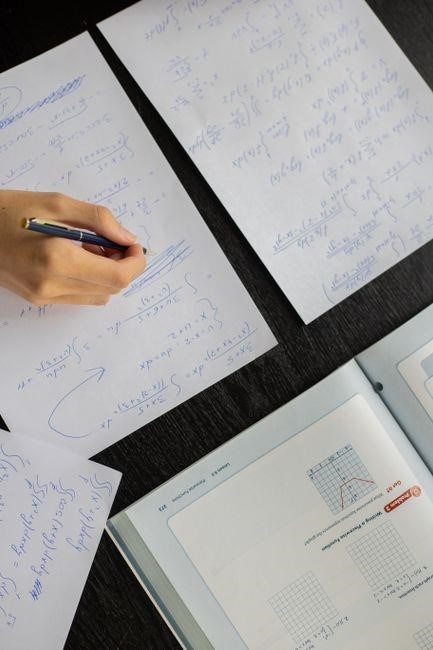
Overview of Two-Column Proofs
Geometry two‑column proof worksheets in PDF format provide step‑by‑step practice, organized statements and reasons, and ready‑to‑print answer keys. Students can quickly verify logic, reinforce reasoning skills, and use the materials for homework, review, or classroom activities. The PDF format supports printing
Definition and Structure

Two‑column proofs are a formal method of presenting geometric arguments in a clear, linear format. In a typical worksheet, each statement is listed in the left column while the corresponding reason—often a definition, postulate, or theorem—is recorded in the right column. This side‑by‑side arrangement forces students to justify every step and to recognize the logical flow that connects givens to the desired conclusion.
Geometry worksheets in PDF form are designed for instant printing and offline use. They feature pre‑drawn diagrams, numbered points, and blank spaces for students to fill in statements and reasons. The PDF layout preserves formatting across devices, ensuring that the two‑column structure remains intact whether viewed on a laptop, tablet, or printed sheet. Many worksheets also include a separate answer key page, allowing students to self‑check their work without external resources.
When constructing a two‑column proof, the first row usually states the given information or a known fact. Subsequent rows build upon this foundation, applying geometric properties such as the properties of parallel lines, congruent triangles, or angle relationships. The final row presents the target statement, completing the logical chain. Because the format is rigid, students learn to avoid unnecessary statements, focus on relevance, and maintain a disciplined approach to reasoning.
Teachers can adapt these worksheets to match curriculum standards, adjusting difficulty by adding hints or requiring justification. The PDF format allows sharing with parents and peers!?.

Key Concepts and Terminology
In a two‑column proof, the statement column lists facts that are either given, derived, or the target conclusion. The reason column provides the justification for each statement, citing a definition, postulate, theorem, or previously proven result. The format encourages a clear distinction between what is known and what follows logically.

Students encounter common terminology such as given, conclusion, inference, congruent, supplementary, alternate interior, and corresponding angles. Recognizing these terms allows learners to match the correct reason to each statement. For example, if a proof requires showing that two angles are supplementary, the reason might be “Alternate interior angles are congruent” combined with the fact that a straight angle measures 180°.
PDF worksheets often include a glossary or a set of hints that define these terms in the context of geometry. This supports students who are new to formal proof language, ensuring they can identify the appropriate reason for each step. By mastering the terminology, learners build a foundation for more advanced proof techniques and can transfer these skills to other areas of mathematics.
These worksheets also feature interactive elements such as fill‑in‑the‑blank statements, drag‑and‑drop reasoning, and instant feedback on common misconceptions. By engaging with these tools, students develop a deeper appreciation for the logical structure that underpins all geometric reasoning, strengthening their mathematical confidence.
Common Proof Types Covered

Geometry two‑column proof worksheets in PDF format typically feature a broad spectrum of proof types that students encounter in secondary mathematics. These include:
- Congruence proofs – demonstrating that two triangles share equal corresponding sides and angles, often using SSS, SAS, ASA, or AAS criteria.
- Similarity proofs – establishing proportional relationships between triangles, employing AA similarity or the Side‑Angle‑Side (SAS) similarity theorem.
- Parallel‑line angle proofs – proving relationships such as alternate interior, corresponding, or consecutive interior angles when a transversal cuts two parallel lines.
- Circle theorems – verifying properties of angles formed by chords, tangents, secants, and arcs, including the inscribed angle theorem and the tangent‑secant theorem.
- Area and volume proofs – confirming formulas for the area of triangles, trapezoids, circles, and the volume of prisms, pyramids, and cylinders.
Each worksheet presents the given information, the target conclusion, and a series of statements that guide the student through the logical steps. The accompanying answer key, also in PDF, provides the correct sequence of statements and reasons, allowing students to self‑check and refine their reasoning skills.

These worksheets offer features and instant feedback to enhance learningnow.

Benefits of PDF Worksheets for Geometry

Students can instantly download, print, and use these PDFs for fast practice. The ready‑print format fits any classroom or home setting, enabling flexible pacing. Built‑in answer keys allow self‑assessment, while the clear two‑column layout reinforces logical reasoning.
Immediate Accessibility
The instant availability of geometry worksheets in PDF format transforms classroom dynamics by providing educators with a ready‑to‑use resource that eliminates the time spent on manual preparation. Each worksheet is meticulously formatted to display a two‑column layout, where statements and reasons are neatly aligned, allowing students to focus on logical progression rather than on the mechanics of writing. Because PDFs preserve fonts, spacing, and alignment across devices, teachers can share the same file with students who use Windows, macOS, iOS, or Android, ensuring consistency in learning materials. The answer keys embedded within the PDFs enable immediate self‑assessment; students can verify their work on the same sheet, reinforcing the connection between reasoning and correctness. This immediacy also supports differentiated instruction: while the core worksheet remains constant, teachers can assign supplementary problems or extensions in separate PDFs, tailoring challenge levels without altering the original. For parents, the ability to download the same worksheets used in school means homework can be completed with the exact same resources, fostering a seamless learning environment at home. Moreover, the PDF’s portability allows teachers to distribute worksheets via email, learning management systems or cloud storage, making it a versatile tool for both in‑class and remote learning scenarios. Finally, the use of PDFs reduces paper waste and eliminates the need for costly printing, aligning educational practices with sustainability goals. Add.
Versatility in Classroom Settings
Geometry two‑column proof worksheets in PDF format are engineered for max flexibility across diverse instructional contexts. In a lecture hall, a teacher can project a single worksheet, allowing the entire class to follow the same logical sequence while the instructor highlights key reasoning steps. In a small‑group workshop, the same PDF can be distributed to each student, who then annotates the statements and reasons on paper or in a digital note‑taking app, fostering discussion. For flipped‑classroom models, students receive the PDF before class, enabling them to work through the proof independently; the teacher then uses class time for targeted remediation or advanced problems. Distance‑learning environments benefit from the PDF’s compatibility with learning management systems, where files can be uploaded, downloaded, and automatically graded by integrated assessment tools. The worksheets also support differentiated instruction: teachers can pair a basic proof with a more challenging variant in separate PDFs, ensuring that all learners are challenged. Because the format is device‑agnostic, students with laptops, tablets, or smartphones can access the same material, eliminating inequities. The inclusion of answer keys within the PDF allows for self‑assessment, encouraging reflection and identifying misconceptions;
Students annotate PDFs daily.
This versatility not only streamlines lesson planning but also promotes a consistent learning experience across multiple teaching modalities.
Students tailor worksheets match pace by.
Integrated Answer Keys for Self-Assessment
Answer keys embedded within geometry two‑column proof worksheets in PDF format empower students to verify each step independently. By juxtaposing the statement column with the corresponding reason column, learners can immediately spot logical gaps, reinforcing the cause‑effect relationship that underpins rigorous proof construction. The keys are formatted as concise, numbered lists that mirror the worksheet structure, enabling rapid cross‑reference. When students compare their work to the key, they receive instant feedback on both correctness and completeness, which is essential for developing metacognitive awareness. Teachers can use these keys to design formative assessments that target specific reasoning skills, such as identifying implicit assumptions or applying theorems correctly. Furthermore, the keys support self‑paced learning; students who master the material can skip ahead, while those who struggle can revisit earlier steps without teacher intervention. The PDF’s interactive features allow the keys to be hidden or revealed, giving educators control over the difficulty level. In collaborative settings, students can discuss discrepancies, fostering peer instruction and collective problem‑solving. The keys also serve as a resource for review sessions, where students reconstruct proofs from scratch, guided by the reference list. Overall, integrated answer keys transform worksheets from passive exercises into dynamic tools for self‑assessment, critical thinking, and mastery of geometric reasoning. Students can use these keys to review and refine proofs, strengthening confidence daily.
Support for Homework and Independent Work
Students seeking to reinforce geometry concepts often turn to printable worksheets that feature two‑column proofs and ready‑to‑use answer keys. These PDF resources are specifically designed for homework assignments, allowing learners to practice constructing logical arguments step by step while maintaining a clear separation between statements and reasons. The format encourages meticulous attention to detail, as each line must be justified by a theorem, definition, or axiom, mirroring the structure of formal proofs taught in class. By working through these problems independently, students develop confidence in their ability to identify missing links, correct errors, and articulate the reasoning behind each deduction. The inclusion of answer keys supports self‑assessment, enabling learners to verify their work without immediate teacher intervention. This autonomous approach not only fosters critical thinking but also promotes time‑management skills, as students learn to allocate appropriate effort to each proof. Additionally, the PDF format allows for easy printing or digital review, making the worksheets accessible for students who prefer paper. Teachers can assign specific worksheets to target particular skills—such as proving congruence, similarity, or angle relationships—while students can use the answer keys to check their progress and identify areas needing further study. Overall, geometry two‑column proof worksheets with answers in PDF form provide a flexible, engaging, and self‑directed learning experience that supports homework and independent work effectively.

Practical Usage and Implementation
Teachers can download the PDF worksheets, print them, and distribute them as homework. The two‑column format guides students to list statements and reasons, reinforcing proof structure. With built‑in answer keys, learners can self‑check, fostering independent practice and deeper understanding. Students review daily.
Downloading and Printing Worksheets
Many online education portals, including free resource sites and teacher‑focused platforms, host geometry two‑column proof worksheets in PDF format. To begin, navigate to a reputable site such as the National Council of Teachers of Mathematics, Wayground, or the OpenStax library. Once there, locate the “Geometry” section and filter by “Proofs” or “Two‑Column” to narrow the search. Each worksheet typically appears as a downloadable PDF icon; clicking it opens the file in a browser preview. From the preview, use the browser’s print dialog (Ctrl + P or Cmd + P) to send the document to a printer. Most PDFs are formatted for A4 or Letter paper, with ample white space for students to write their statements and reasons. If you prefer digital practice, many sites allow you to save the PDF to a tablet or laptop, then use a stylus or keyboard to fill in the blanks; For classroom use, teachers can print a batch of worksheets, laminate the top rows for reuse, and attach answer keys on the back. The answer keys are usually included in a separate PDF or embedded at the bottom of the same file, enabling instant self‑assessment. When printing, double‑check the page orientation and scaling settings to avoid truncation of the proof columns. Some platforms also offer a “print‑ready” option that automatically formats the worksheet for two‑column layout and includes a header with the lesson title and date. By following these steps, educators can quickly integrate high‑quality, ready‑to‑print geometry proof worksheets into lesson plans, homework assignments, or independent study sessions. Additionally, teachers can customize the worksheets by editing the PDF with software like Adobe Acrobat or free tools such as PDF‑XChange Editor, allowing them to insert specific problem sets or adjust the difficulty level. Students who work on paper can later scan their completed proofs and upload them to a learning management system for teacher review. For those who prefer a digital‑only workflow, many platforms provide interactive PDFs that support form fields, so students can type directly into the proof columns. Finally, sharing the PDFs via email or a cloud folder ensures that all students, regardless of access to a classroom printer, can participate in the same practice activities. This flexibility makes the two‑column proof worksheets an invaluable resource for diverse learning environments. Students can also annotate directly on the PDF.
When students work with geometry two‑column proof worksheets in PDF format, the first step is to clearly separate the logical statements from their supporting reasons. The worksheets are designed with two distinct vertical columns: the left column lists each statement in the order it is derived, while the right column provides the corresponding reason—whether it is a given, a definition, a theorem, or a previously proven result. Next, students should write down any required intermediate results, such as “∠ABC = ∠DEF” or “AB ∥ CD,” and immediately pair them with the appropriate reason, for example “Parallel lines cut by a transversal” or “Corresponding angles are equal.” The key to effective organization is consistency: every statement must have a matching reason, and the reasons should be concise yet complete. When the proof is complete, students can cross‑check each pair to ensure that no statement is left unsupported. The answer key, typically provided in a separate PDF or at the bottom of the worksheet, allows students to verify their work immediately. By practicing this disciplined approach, learners develop a habit of logical sequencing and clear justification, skills that are essential for mastering more complex geometric arguments. The PDF format also facilitates easy annotation: students can write directly into the columns, then save or print their finished proofs for submission or for the teacher’s review. This method not only reinforces the structure of a two‑column proof but also promotes self‑assessment and peer‑review practices within the classroom setting. Share proofs with classmates now
Supplementary Resources and Extensions
Beyond the core PDF worksheets, teachers can enrich the learning experience with interactive tools, dynamic geometry software, and supplemental reading. Many online platforms host free, downloadable lesson plans that align with the two‑column format, offering step‑by‑step guidance and annotated examples. Students can explore virtual manipulatives that illustrate key theorems—such as the Alternate Interior Angles Theorem or the Converse of the Corresponding Angles Postulate—allowing them to visualize how each statement follows logically. For deeper engagement, educators can assign project‑based tasks where learners create their own proof scenarios, then convert them into two‑column layouts. This encourages creative problem‑solving and reinforces the habit of pairing each claim with a precise justification. Additionally, a variety of printable answer key templates are available, enabling teachers to customize feedback and highlight common misconceptions. Online forums and discussion boards provide a community for sharing best practices, troubleshooting proof errors, and celebrating successful proofs. Finally, incorporating assessment rubrics that focus on clarity, logical flow, and correct use of geometric terminology helps students self‑evaluate and refine their proofs. By integrating these resources, classrooms can move from rote practice to a more holistic, inquiry‑driven approach to geometry reasoning. These tools help students master proof writing. Such resources enable teachers to adjust difficulty for each student and support mastery daily!!