Lux Thermostat Instruction Manual: A Comprehensive Guide
This manual provides detailed instructions for installing, operating, and troubleshooting various Lux thermostat models, including the PSP511LC, TQ1/TQx, and CS1 Smart Thermostat.
Lux thermostats offer a balance of functionality, reliability, and affordability for residential heating and cooling control. From traditional programmable models like the PSP511LC, featuring a 5-2 day schedule and backlight, to the more advanced TQ series and the smart capabilities of the LUX CS1, there’s a Lux thermostat to suit diverse needs.
These thermostats are designed for universal compatibility, simplifying installation for most HVAC systems. The LUX brand bridges the gap between basic, non-programmable thermostats and fully-featured smart home systems, offering features like geofencing and app control with select models.
This guide will walk you through setup, programming, smart features, and troubleshooting, ensuring optimal comfort and energy savings with your Lux thermostat.
Understanding Lux Thermostat Models
Lux offers a range of thermostats catering to different user preferences and system requirements. The PSP511LC is a popular programmable model, known for its simple 5-2 day scheduling and easy-to-read backlit display. It provides reliable temperature control without the complexities of smart features.
The TQ1 and TQx series represent a step up, offering enhanced functionality and compatibility. These models are often favored by HVAC professionals. Finally, the LUX CS1 Smart Thermostat integrates with a dedicated app, enabling remote control, geofencing, and smart recovery features for optimized energy efficiency and convenience.

Understanding these distinctions is crucial for selecting the right model and utilizing its specific capabilities effectively.
PSP511LC Model Overview
The Lux Pro Programmable Thermostat PSP511LC is designed for straightforward temperature management in homes with 1 heat and 1 cool systems. It features a user-friendly interface and a prominent backlit display for easy visibility. This model excels in its simplicity, offering a 5-2 day programmable schedule allowing customized temperature settings for weekdays and weekends.
Key features include selectable smart recovery, which anticipates temperature changes, and universal compatibility with most HVAC systems. While not a “smart” thermostat, the PSP511LC provides a solid middle ground, offering programmable control without the need for app connectivity or advanced features. It’s a reliable choice for basic heating and cooling needs.
TQ1 and TQx Models Overview
The LUX TQ Series, encompassing TQ1 and TQx models, represents a step towards smart home integration for HVAC control. These thermostats are geared towards HVAC contractors and wholesalers, offering features like geofencing capabilities – allowing temperature adjustments based on location. Though not fully “smart” in the comprehensive sense, they bridge the gap between traditional and advanced thermostat technology.
The TQ series supports remote control and monitoring, enhancing user convenience. They are designed for easy installation and compatibility with a wide range of HVAC systems. These models provide a balance of affordability and functionality, offering features like scheduling and energy-saving modes, making them a practical upgrade for many homes.
The Johnson Controls LUX CS1 Smart Thermostat marks a significant advancement in the LUX product line, offering a range of user-friendly features when paired with the dedicated LUX App. This thermostat provides convenient control over your home’s heating and cooling systems directly from your smartphone or tablet.
The CS1 boasts easy-to-use functionalities, including remote temperature adjustments, scheduling capabilities, and access to various energy-saving settings. It’s designed to simplify home comfort management and potentially reduce energy consumption. Through the app, users can monitor system performance and receive alerts, enhancing overall control and efficiency. The CS1 aims to deliver a smart thermostat experience without unnecessary complexity.
Initial Setup and Installation
Proper installation is crucial for optimal performance of your Lux thermostat. Begin with a thorough Thermostat Compatibility Check, ensuring your HVAC system meets the requirements. Carefully review the Wiring Diagrams and Connections specific to your model – incorrect wiring can damage your system.
Before connecting wires, always power off your HVAC system at the breaker. Once wiring is complete, proceed with Mounting the Thermostat Base securely to the wall. Double-check all connections before restoring power. A level installation ensures accurate temperature readings. Refer to the detailed diagrams in this manual for guidance, and if unsure, consult a qualified HVAC technician.
Thermostat Compatibility Check
Before installation, verify compatibility with your heating and cooling system. Lux thermostats generally support 1 heat/1 cool conventional systems, but compatibility varies by model. Confirm your system doesn’t require a “C-wire” (common wire) – some Lux models function without one, while others may need an adapter.
Check if you have standard low-voltage wiring (24V). Heat pump systems, millivolt systems, or line voltage systems (120V/240V) may not be compatible. Consult the Lux website or this manual’s compatibility chart for specific model limitations. Incorrect installation on an incompatible system can cause damage; professional assistance is recommended if unsure.
Wiring Diagrams and Connections
Carefully disconnect power to your HVAC system at the breaker before wiring. Refer to the wiring diagram included with your Lux thermostat and compare it to your existing thermostat’s wiring. Common terminals include Rh, Rc, W, Y, and G. If you have a C-wire, connect it to the ‘C’ terminal on the Lux thermostat.
If no C-wire exists, consult the Lux documentation for potential adapter solutions. Incorrect wiring can damage your system. Ensure wires are securely connected to the terminals. Label wires before disconnecting the old thermostat for easy re-identification. Double-check all connections before restoring power.

Mounting the Thermostat Base
After wiring, carefully mount the thermostat base to the wall using the provided screws. Ensure the base is level for accurate temperature readings and a professional appearance. Use a drill if necessary, and appropriate wall anchors for secure mounting.
Feed the wires neatly through the opening in the base. Gently push any excess wire back into the wall cavity. Snap the thermostat onto the mounted base, ensuring it clicks securely into place. Verify a firm connection. Avoid forcing it. A loose connection can cause operational issues. Finally, confirm the base is firmly attached to the wall before proceeding.
Basic Operation and Programming
Once installed, powering on your Lux thermostat initiates the initial configuration process. The display will guide you through essential settings. Familiarize yourself with the buttons for temperature adjustment, mode selection (heat, cool, auto, off), and accessing the programming menu;
Basic operation involves setting your desired temperature. Programming allows for automated temperature control based on your schedule. The Lux thermostats offer a user-friendly interface for setting schedules, including different temperatures for various times of the day. Explore the manual’s programming section to customize your comfort and energy savings.
Powering On and Initial Configuration
Upon installation and applying power to your Lux thermostat, the unit will initiate its startup sequence. The display will illuminate, and you’ll likely be prompted to confirm the current date and time. This initial setup is crucial for accurate scheduling and operation.
Follow the on-screen prompts, navigating with the thermostat’s buttons. You may need to select your system type (heat pump, forced air, etc.). Ensure this selection matches your home’s HVAC system for optimal performance. The thermostat may also ask about your preferred temperature scale (Fahrenheit or Celsius). Accurate initial configuration ensures a smooth user experience.
Setting the Date and Time
Accurate date and time settings are fundamental for proper scheduling and functionality of your Lux thermostat. Typically, you’ll access these settings through the thermostat’s menu, often labeled “Settings” or “Configuration.” Use the navigation buttons to highlight the “Date” and “Time” options.
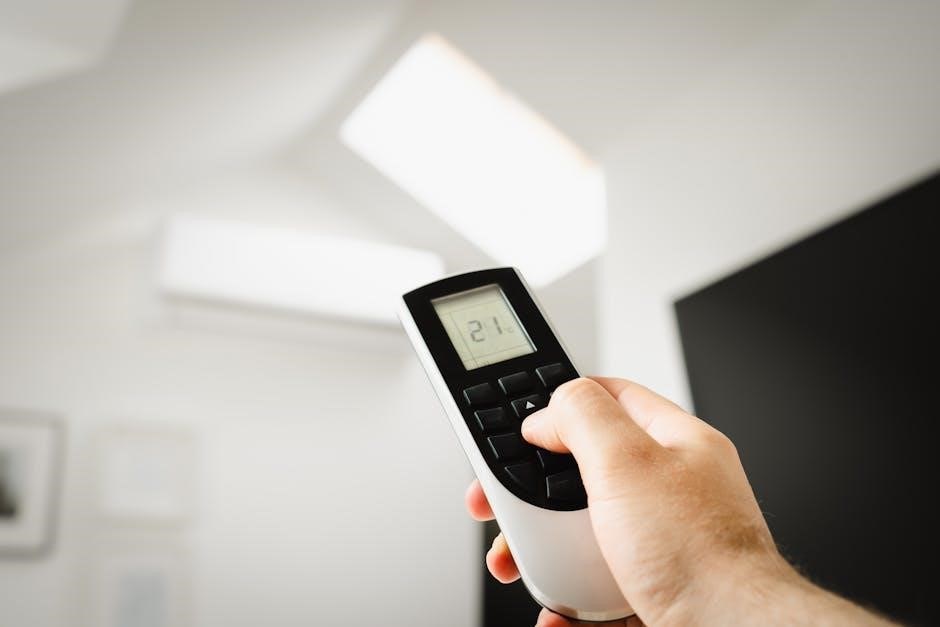
Adjust the values using the up and down arrows, confirming each selection. Pay close attention to the AM/PM designation when setting the time. Incorrect date or time settings will cause scheduling errors, leading to unexpected heating or cooling. Double-check your entries before saving. A correctly configured date and time ensure your Lux thermostat operates as intended, maximizing energy savings and comfort.
Temperature Control: Heating and Cooling Modes
Your Lux thermostat offers distinct heating and cooling modes, selectable via the main menu or dedicated buttons. “Heat” mode activates your heating system when the room temperature falls below the setpoint, providing warmth. Conversely, “Cool” mode engages the cooling system when the temperature exceeds the setpoint, delivering cool air.
An “Auto” mode intelligently switches between heating and cooling to maintain your desired temperature. “Off” disables both systems. Ensure the correct mode is selected for optimal comfort and energy efficiency. Adjust the setpoint temperature using the up and down arrows to fine-tune your desired indoor climate. Regularly verify the selected mode aligns with the current season and your preferences.
Programming Schedules (5-2 Day)
The 5-2 day schedule allows for distinct temperature settings for weekdays (Monday-Friday) and weekends (Saturday-Sunday), optimizing comfort and energy savings. This feature enables you to program lower temperatures during unoccupied hours on weekdays and weekends, reducing energy consumption. Access the scheduling menu through the thermostat interface.
You can define multiple periods per day – such as Wake, Leave, Return, and Sleep – each with a specific temperature setpoint. The thermostat automatically adjusts the temperature based on the programmed schedule. Familiarize yourself with the menu options to customize the schedule to your lifestyle. Consistent scheduling maximizes energy efficiency and comfort.
Understanding the 5-2 Day Schedule
The 5-2 day schedule differentiates between weekday and weekend temperature preferences. Weekdays (Monday-Friday) operate under one programmed schedule, while weekends (Saturday-Sunday) follow a separate, customizable schedule. This allows for tailored comfort based on typical occupancy patterns. Each day can have up to four programmable periods: Wake, Leave, Return, and Sleep.
Within each period, you set a desired temperature. The thermostat automatically transitions between these setpoints throughout the day. This schedule is ideal for households with consistent routines. Understanding this structure is key to maximizing energy savings and maintaining a comfortable environment. Adjust periods and temperatures to match your lifestyle for optimal results.
Setting Temperature Setbacks
Temperature setbacks are crucial for energy conservation within the 5-2 day schedule. During periods when the home is unoccupied or occupants are asleep, lowering the heating setpoint in winter or raising the cooling setpoint in summer reduces energy consumption. The degree of setback is customizable; even a few degrees can yield significant savings over time.
To set setbacks, adjust the temperature for specific periods (Leave, Sleep) to be lower or higher than the comfort temperatures (Wake, Return). The thermostat will automatically revert to the programmed comfort settings when the next period begins. Experiment with different setback levels to find a balance between comfort and energy efficiency.
Overriding the Programmed Schedule
The Lux thermostat allows temporary overrides to the programmed schedule for immediate comfort adjustments. This is useful for unexpected changes in occupancy or weather conditions. Typically, a temporary hold can be activated by directly adjusting the setpoint temperature using the up or down buttons.
The duration of the hold is often selectable – options like ‘Until Next Scheduled Change’ or a specific number of hours. Once the hold period expires, the thermostat automatically resumes the regularly programmed schedule. For a permanent change, you’ll need to edit the schedule directly through the programming mode, rather than relying on temporary overrides.
Smart Features and Connectivity

Lux thermostats, particularly the CS1 Smart model and TQ series, offer advanced features enhancing convenience and energy savings. Geofencing utilizes your smartphone’s location to automatically adjust the temperature when you leave or approach home, optimizing comfort and reducing energy waste.
Integration with the LUX app enables remote control of your thermostat from anywhere with an internet connection. The Smart Recovery feature learns your heating/cooling patterns to proactively adjust the temperature, ensuring your home reaches the desired temperature precisely when needed. These smart capabilities provide a connected and efficient home climate control experience.
Geofencing Functionality
Lux thermostats with geofencing capabilities, like the TQ series, leverage your smartphone’s location to automate temperature adjustments. By setting a virtual perimeter around your home within the LUX app, the thermostat detects when your device enters or exits this zone.
Upon departure, the thermostat can automatically switch to an energy-saving “Away” mode, lowering heating or raising cooling settings. As you return, it anticipates your arrival and begins adjusting the temperature back to your preferred comfort level. This feature eliminates manual adjustments and ensures optimal comfort while minimizing energy consumption, providing a truly “set it and forget it” experience.
LUX App Integration and Control
The LUX app serves as the central hub for controlling compatible Lux smart thermostats, such as the CS1 model. Through the app, users gain remote access to their home’s temperature settings from anywhere with an internet connection. This allows for convenient adjustments, even when away from home, ensuring comfort and energy savings.
The app provides a user-friendly interface for scheduling, overriding programs, and monitoring energy usage. It also facilitates the setup and configuration of advanced features like geofencing and smart recovery. Furthermore, the app delivers important notifications, such as filter change reminders, keeping your system running efficiently and reliably.
Smart Recovery Feature Explained
The Smart Recovery feature intelligently learns your heating and cooling patterns to proactively prepare your home for scheduled temperature changes. Unlike traditional thermostats that simply turn on at the set time, Smart Recovery begins heating or cooling before the scheduled time, ensuring your desired temperature is reached precisely when you need it.
This anticipatory approach maximizes comfort and minimizes energy waste. The system analyzes how long it takes to heat or cool your home and adjusts its start time accordingly. Through the LUX app, users can often customize the Smart Recovery settings to fine-tune its performance and optimize energy efficiency based on their specific home and preferences.
Troubleshooting Common Issues
Encountering problems with your Lux thermostat? Several common issues have straightforward solutions. If the thermostat isn’t powering on, first check the circuit breaker and ensure proper wiring connections. For incorrect temperature readings, verify the thermostat isn’t exposed to direct sunlight or drafts, and recalibrate if necessary through the settings menu.
Connectivity problems with the LUX app often stem from Wi-Fi signal strength or incorrect network credentials. Ensure a stable internet connection and double-check your password. Resetting the thermostat and re-pairing it with the app can also resolve these issues. Refer to the detailed troubleshooting section within the LUX app or online support resources for more specific guidance.
Thermostat Not Powering On
If your Lux thermostat fails to power on, begin with the simplest checks. First, verify the circuit breaker controlling the HVAC system hasn’t tripped. Reset it if necessary. Next, carefully inspect the wiring connections at both the thermostat and the furnace/air handler. Ensure wires are securely fastened and haven’t become loose or corroded.
Confirm the thermostat’s power source – some models require batteries as a backup, even when wired. Replace batteries if depleted. If the issue persists, consult the wiring diagram in this manual to confirm correct wire placement. A faulty C-wire (common wire) is a frequent cause; professional assistance may be needed to verify and correct this.
Incorrect Temperature Readings
If your Lux thermostat displays inaccurate temperatures, several factors could be at play. First, ensure the thermostat isn’t directly exposed to sunlight, drafts, or heat-generating appliances, as these can skew readings. Check for obstructions blocking airflow around the unit. Verify the thermostat is calibrated correctly; some models offer calibration settings within the menu.
Compare the thermostat’s reading with a reliable thermometer placed nearby. A significant discrepancy suggests a potential sensor issue. If the problem continues, try resetting the thermostat to its factory defaults (refer to the ‘Advanced Settings’ section). If none of these steps resolve the issue, professional HVAC assistance may be required to diagnose a faulty temperature sensor.
Connectivity Problems with the App
Experiencing issues connecting your Lux thermostat to the LUX app? First, confirm your home Wi-Fi network is functioning correctly and that your smartphone or tablet has a stable internet connection. Ensure the thermostat is within range of your Wi-Fi router. Restart both the thermostat and your mobile device.
Double-check that you’re using the correct login credentials for the LUX app. If problems persist, try deleting and reinstalling the app. Verify the thermostat’s firmware is up-to-date, as updates often include connectivity improvements. If still unsuccessful, consult the LUX support website for specific troubleshooting steps or contact their customer service for assistance.
Advanced Settings and Customization

Lux thermostats offer several advanced settings to personalize your comfort experience. Backlight Adjustment allows you to control the display’s brightness and duration, optimizing visibility and energy conservation. Display Settings enable customization of temperature units (Fahrenheit or Celsius) and screen appearance.
Utilize the Filter Change Reminders feature to schedule notifications, ensuring optimal HVAC system performance and air quality. Explore options for adjusting swing temperatures, influencing how frequently the system cycles on and off. Some models support calibration features for enhanced temperature accuracy. These settings are typically accessed through the thermostat’s menu system, providing granular control over your home’s climate.
Backlight Adjustment

The backlight feature enhances visibility in low-light conditions, making the thermostat display easier to read. Lux thermostats typically allow adjustment of both the backlight brightness and its duration. You can often select from several brightness levels – off, low, medium, and high – to suit your preference and minimize energy consumption.
The duration setting controls how long the backlight remains illuminated after a button press. Options may include a few seconds, 5 seconds, 10 seconds, or continuous illumination. Access these settings through the thermostat’s menu, navigating to the ‘Display’ or ‘Settings’ section. Proper adjustment ensures clear readability without unnecessary power usage.
Display Settings
Lux thermostats offer customizable display settings to personalize your user experience. These settings generally include options to adjust the temperature unit – Fahrenheit or Celsius – to match your preference. You can also modify the display’s contrast level for optimal clarity, ensuring the information is easily readable from various angles and lighting conditions.

Some models allow you to select different display modes, such as a standard view or a more detailed view showing additional information like humidity levels. Access these settings through the thermostat’s menu, typically found under ‘Settings’ or ‘Display’. Tailoring these settings enhances usability and provides a comfortable viewing experience.
Filter Change Reminders
Maintaining a clean air filter is crucial for efficient HVAC system operation and indoor air quality. Many Lux thermostats, particularly the smart models like the CS1, include a filter change reminder feature. This helpful function tracks the time since your last filter replacement and alerts you when it’s time for a new one.
You can typically set the reminder interval based on your filter type and usage – for example, every 1-3 months. The thermostat will display a notification on the screen and, if connected to the LUX app, send a reminder directly to your smartphone. Regularly changing your filter ensures optimal performance and extends the lifespan of your HVAC system.