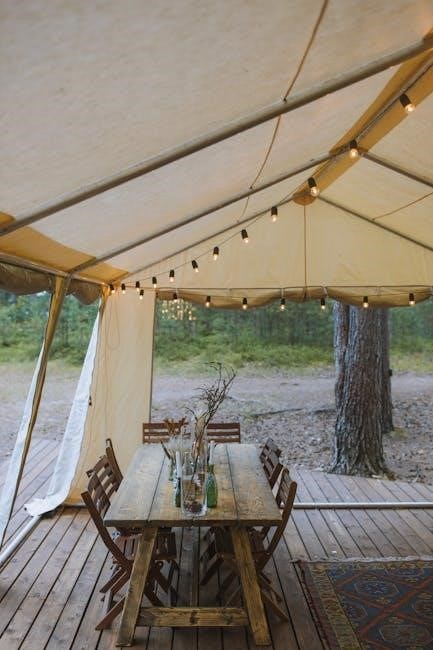
Setting up a 10×30 tent requires careful attention to detail, ensuring a stable and secure temporary structure for various outdoor events.
Understanding the components and following safety guidelines, as outlined in available manuals and videos, is crucial for a successful installation.
Understanding the Tent Components
A standard 10×30 tent comprises several key elements working in unison. These include the frame – typically constructed from steel or aluminum poles connected by connectors – forming the tent’s skeleton. The canopy cover, usually made of polyethylene or vinyl, provides weather protection. Sidewalls, often featuring Velcro or clip attachments, offer enclosure and shielding from the elements.
Essential connectors, like corner brackets and roof joints, secure the frame sections. Stakes are vital for ground anchoring, while weight bags present an alternative. Understanding each component’s function, as detailed in assembly instructions (like those found on gettent.com), is paramount. Familiarizing yourself with these parts before assembly streamlines the process and ensures a structurally sound setup, avoiding potential hazards highlighted in safety manuals.
Safety Precautions Before Assembly
Prioritizing safety during 10×30 tent setup is non-negotiable. Always inspect the site for overhead power lines and underground utilities before commencing. Be mindful of weather conditions; avoid assembly during high winds or storms. The manual from gettent.com emphasizes that these tents are temporary structures and don’t meet structural codes unless specified.
Personal protective equipment (PPE), such as gloves and eye protection, is recommended. Understand the safety alert symbol – a warning for potential injury. Never attempt assembly alone; having assistance is crucial. Recognize that instructions can’t cover all scenarios, so common sense and caution are vital. Proper anchoring is essential to prevent tent collapse, especially considering unpredictable weather patterns.
Unpacking and Inventory
Carefully unpack all components and compare them against the package contents list, verifying you have all necessary parts before beginning assembly.
Checking the Package Contents
Begin by thoroughly inspecting the package upon arrival for any signs of damage during shipping. Carefully open the carton and lay out all the components on a clean, spacious surface. A comprehensive inventory is vital; cross-reference each item with the parts list typically found within the instruction manual or on the manufacturer’s website.
Expect to find tent poles (various lengths and diameters), canopy cover, sidewalls, connectors, stakes, ropes, and potentially weight bags. Ensure the correct quantity of each item is present. Missing parts can significantly delay the setup process. Pay close attention to smaller components like clips, fasteners, and any specialized connectors. Document any discrepancies immediately and contact the retailer or manufacturer for replacements before proceeding with assembly.
Identifying Tent Poles and Connectors
Accurate identification of tent poles and connectors is paramount for a smooth assembly. Typically, a 10×30 tent utilizes a combination of straight and curved poles, often color-coded or labeled for specific frame sections – base rails, roof supports, and corner connectors.
Connectors, usually made of plastic or metal, vary in shape and function. Some are simple push-button connectors, while others require insertion and twisting. Familiarize yourself with each connector type before starting. Refer to the assembly instruction manual (like the PT-1030-5 Assembly Instruction) for detailed diagrams illustrating pole and connector pairings. Incorrectly matched components can lead to instability or damage. Laying out poles by length and connector type beforehand will streamline the building process.

Frame Assembly ⸺ Step-by-Step
Begin by connecting the base frame sections, then systematically assemble the roof frame, utilizing connectors for stability. Refer to diagrams for proper alignment.
Connecting the Base Frame Sections
Initiate the frame assembly by laying out all base frame sections on a flat, protected surface. Carefully connect these sections, typically using push-pin connectors or similar locking mechanisms, ensuring a snug and secure fit.
Double-check each connection point to confirm stability before proceeding.
Refer to the provided assembly instruction manual (like the PT-1030-5 Assembly Instruction found on Amazon) for specific connector types and connection sequences.
Pay close attention to the orientation of each section, as incorrect alignment can compromise the overall structural integrity.
Once the base rectangle is formed, verify its squareness by measuring the diagonals – they should be equal.
This foundational step is critical for a stable tent structure.
Assembling the Roof Frame
With the base frame established, begin assembling the roof frame sections. These typically consist of curved poles that interlock to create the tent’s peak and sloping roofline. Utilize the connectors, often push-button or spring-loaded, to join the roof poles securely.
Consult the assembly manual (like C07Y10X30-10-x-30-master-series-frame-tent-1-pc-manual.pdf from gettent.com) for the correct pole arrangement and connection order.
Carefully raise the roof frame, attaching it to the base frame at designated points. Ensure all connections are firmly locked to prevent collapse.
Proper roof frame assembly is vital for supporting the canopy cover and withstanding wind loads.
Canopy Cover Attachment
Carefully drape the canopy cover over the assembled frame, ensuring even distribution. Secure it using provided fasteners like ropes, clips, or Velcro straps for a taut fit.
Positioning the Canopy on the Frame
Begin by carefully unfolding the canopy cover, laying it out flat near the assembled tent frame. It’s often easiest to start with the canopy positioned lengthwise along the frame, aligning the edges.
With assistance, lift the canopy and gently drape it over the top of the frame. Ensure the canopy is centered, leaving an equal amount of material extending beyond each side of the frame. This allows for proper securing later.
Pay attention to any designated corners or markings on the canopy, as these often correspond to specific frame sections. Proper alignment at this stage is vital for a clean, secure fit and prevents uneven tension. Avoid stretching or pulling excessively during this initial positioning; let gravity do most of the work.
Securing the Canopy with Fasteners
Once the canopy is positioned, begin securing it to the frame using the provided fasteners – typically clips, ropes, or Velcro straps. Start at the corners, attaching the canopy securely to the frame’s corner posts.
Work your way along the sides, spacing the fasteners evenly to distribute tension. Ensure each fastener is firmly attached, but avoid over-tightening, which could damage the canopy material.
Many canopies utilize a combination of methods; for example, clips along the edges and ropes through grommets. Refer to the manufacturer’s instructions for the specific fastening system used with your 10×30 tent. Consistent tension is key to a taut, weatherproof canopy.
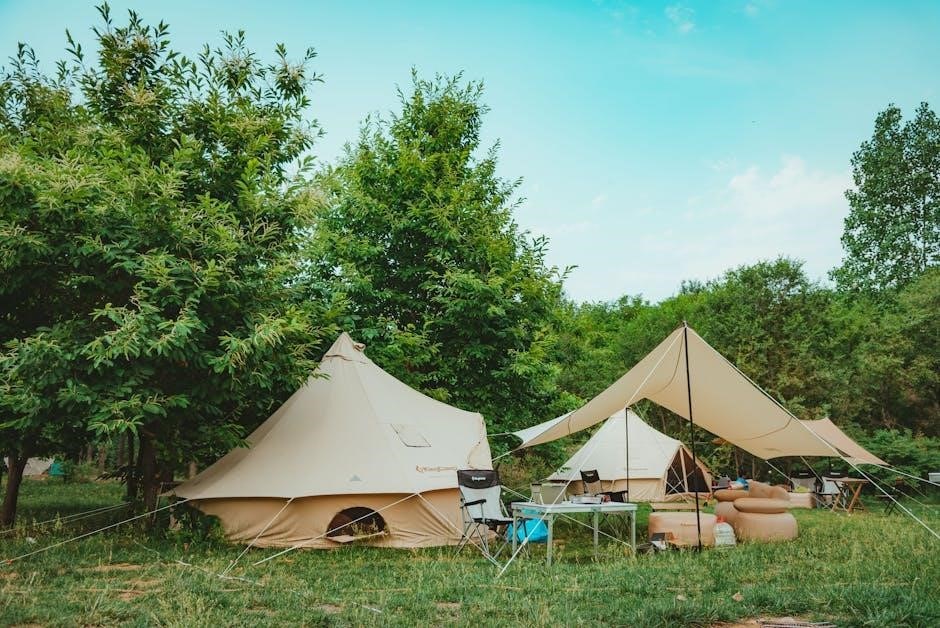
Sidewall Installation
Attaching sidewalls provides enclosure and protection from the elements; utilize Velcro, clips, or ties to connect them securely to the tent frame.
Attaching Sidewalls to the Frame
Begin by laying out the sidewalls, identifying the top and bottom edges, and noting any specific orientation requirements based on door or window placements. Carefully align the sidewall’s edge with the tent frame, typically starting at a corner post.
Most 10×30 tents utilize Velcro strips, clips, or tie-down points along the frame to secure the sidewalls. Press the Velcro firmly to ensure a strong bond, or clip the sidewall fabric securely onto the frame’s tubing. If using ties, loop them through the grommets on the sidewall and around the frame poles, tightening as needed.
Work your way around the perimeter of the tent, attaching each sidewall section incrementally. Ensure consistent tension to avoid sagging or gaps. Pay close attention to corners, reinforcing them for added stability. Properly attached sidewalls significantly enhance the tent’s protection from wind and weather.
Securing Sidewalls with Velcro or Clips
When utilizing Velcro, ensure both the tent frame and sidewall strips are clean and free of debris for optimal adhesion. Apply firm, even pressure along the entire length of the Velcro to create a secure bond, preventing detachment during windy conditions. Regularly inspect the Velcro for wear and tear.
For clip-based systems, confirm each clip is fully engaged around the tent frame tubing. These clips often feature a spring-loaded mechanism; listen for a click to verify proper attachment. Avoid overstretching or forcing the clips, as this can damage them.
Periodically check all Velcro and clip connections throughout the event to maintain sidewall security. Reinforce critical areas, like corners, with additional fasteners if necessary. A properly secured sidewall provides essential weather protection and structural integrity.
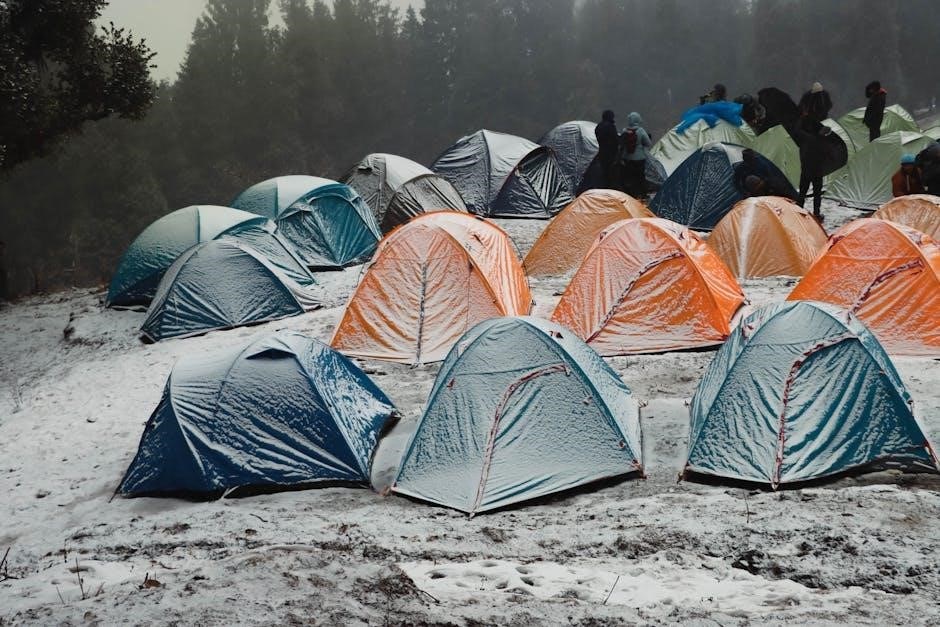
Anchoring the Tent
Securely anchoring your 10×30 tent is vital for stability, especially in unpredictable weather. Utilize robust stakes or weighted bags to prevent shifting or damage.
Using Stakes for Ground Anchoring
Properly utilizing stakes is a fundamental aspect of securing a 10×30 tent, particularly on grassy or relatively soft ground. Begin by inserting stakes through the designated loops or grommets located along the tent’s edges and sidewalls, angling them approximately 45 degrees away from the tent.
Ensure the stakes are driven fully into the ground, leaving only a small portion exposed. For enhanced holding power, consider using longer, heavier-duty stakes, especially if anticipating windy conditions. Regularly inspect the stakes during the event to confirm they remain firmly planted.
Remember that the installer is responsible for anticipating weather severity for proper time and method of installation. If the ground is particularly hard, pre-drilling pilot holes can facilitate stake insertion and prevent bending. Always exercise caution when hammering stakes to avoid injury.
Alternative Anchoring Methods (Weight Bags)
When staking isn’t feasible – such as on concrete, asphalt, or rocky terrain – weight bags offer a reliable alternative for anchoring a 10×30 tent. These bags, typically constructed from durable materials, are filled with sand or water to provide substantial weight and stability.
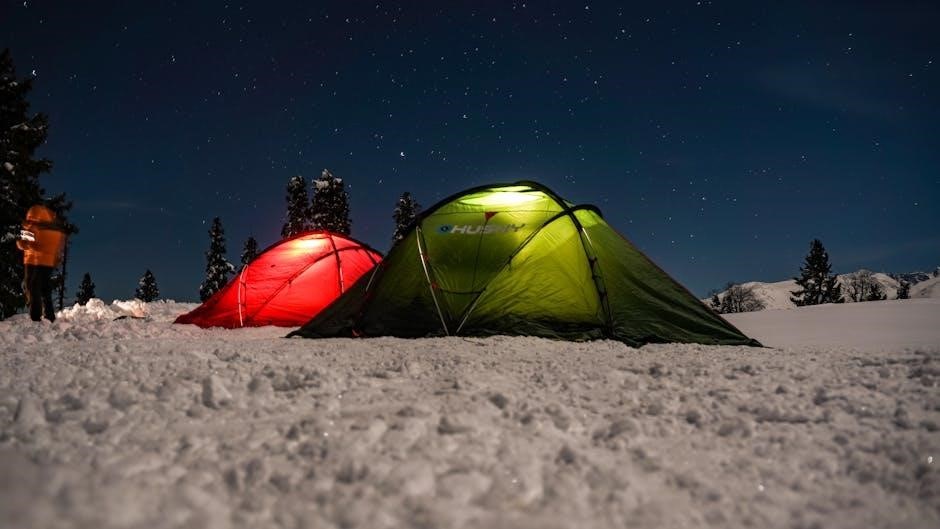
Attach the weight bags to the tent’s legs or designated anchor points, ensuring even distribution around the perimeter. The amount of weight required will depend on anticipated wind conditions; more weight is necessary in exposed areas.
Common sense and caution are factors which cannot be built into this product, but must be supplied by the installer. Regularly check the weight bags to ensure they remain securely attached and haven’t developed leaks. Weight bags are a convenient and effective solution for temporary tent anchoring where traditional staking is impractical.
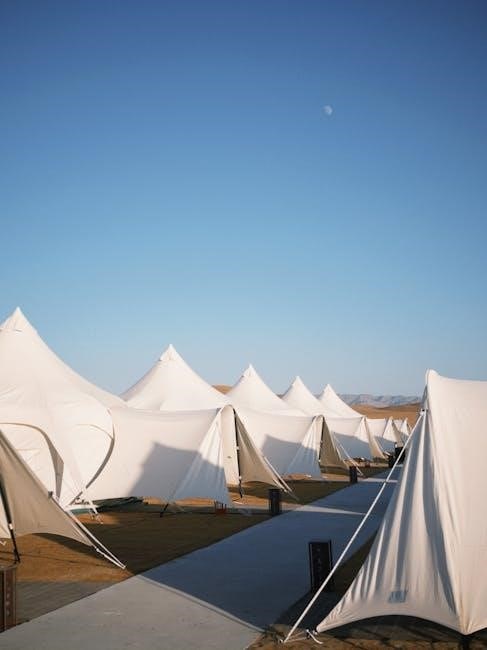
Tensioning and Adjustments
Proper tensioning of poles and canopy fabric is vital for stability, especially considering unpredictable weather conditions; adjust for a secure fit.
Adjusting Pole Tension for Stability
Achieving optimal pole tension is paramount for a robust and safe 10×30 tent structure. Begin by systematically checking each pole connection, ensuring all buttons and locking mechanisms are securely fastened. Uneven tension can lead to instability, particularly in windy conditions.
If poles appear loose, gently adjust them, applying even pressure to distribute the load. Avoid over-tightening, as this could damage the poles or connectors. Observe the canopy’s overall shape; it should be taut but not excessively stretched. A sagging canopy indicates insufficient tension, while wrinkles suggest over-tensioning.
Remember that common sense and caution are essential, as the provided instructions cannot account for every possible scenario. Regularly inspect pole tension throughout the event, making adjustments as needed to maintain stability and safety.
Ensuring Proper Canopy Stretch
A correctly stretched canopy is vital for water runoff and preventing sagging, contributing significantly to the tent’s overall stability. Begin by evenly distributing the canopy over the assembled frame, ensuring it’s centered and aligned.
Secure the canopy using the provided fasteners – typically clips or Velcro – starting at opposite corners and working inwards. This prevents localized stress and ensures uniform tension. The canopy should be taut, but avoid overstretching, which can damage the fabric or fasteners.
Inspect for wrinkles or pooling water, indicating uneven stretch. Adjust fasteners as needed to achieve a smooth, consistent surface. Remember, unpredictable weather demands proactive adjustments; regularly check the canopy’s tension throughout the event.

Disassembly and Storage
Carefully remove the canopy and sidewalls, then collapse the frame systematically for efficient storage. Proper cleaning and drying before storing prolongs the tent’s lifespan.
Removing the Canopy and Sidewalls
Begin the disassembly process by carefully detaching the sidewalls from the frame. Most sidewalls utilize Velcro or clips for easy attachment and removal, so gently unfasten these securing points along the entire length of each wall.
Once the sidewalls are removed, focus on the canopy cover. Loosen any fasteners – such as straps, buckles, or clips – that secure the canopy to the frame. It’s often helpful to have a second person assist with this step, especially with larger canopies.
Carefully lift the canopy from the frame, ensuring no parts remain snagged or connected. Fold the canopy neatly, and then fold the sidewalls, preparing them for storage. Inspect all components for damage during removal.
Collapsing and Storing the Frame
With the canopy and sidewalls removed, begin collapsing the tent frame systematically. Start by disconnecting the roof frame sections, carefully releasing the locking mechanisms or pins that hold them together.
Next, disassemble the base frame, separating the legs and corner connectors. It’s beneficial to lay out a protective tarp or ground cover during disassembly to prevent scratching or damage to the frame components.
Once fully disassembled, bundle the poles and connectors together, securing them with straps or rope. Store the frame in a dry, protected location, ideally in the provided carrying bag or a similar storage container, to prolong its lifespan.